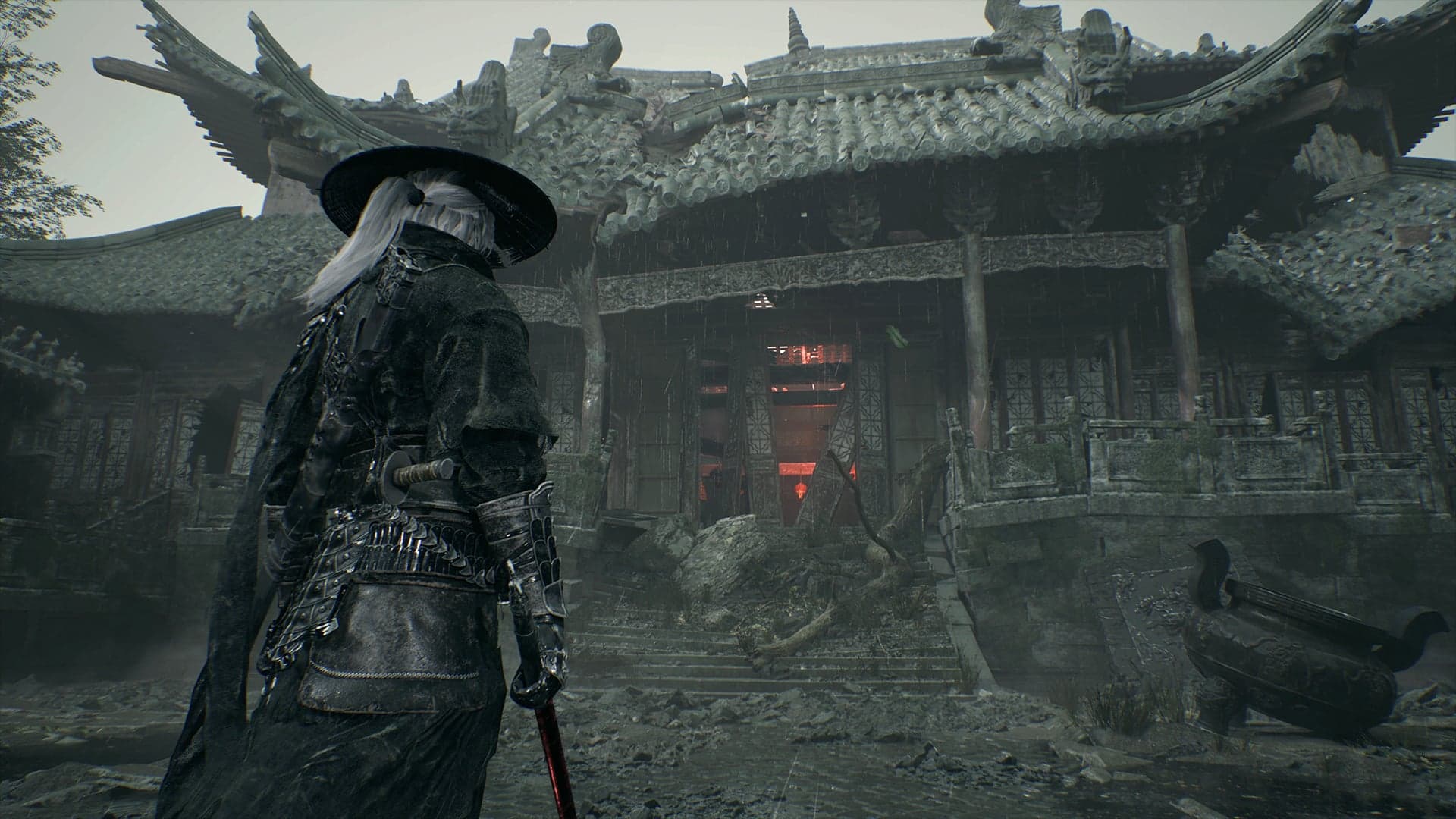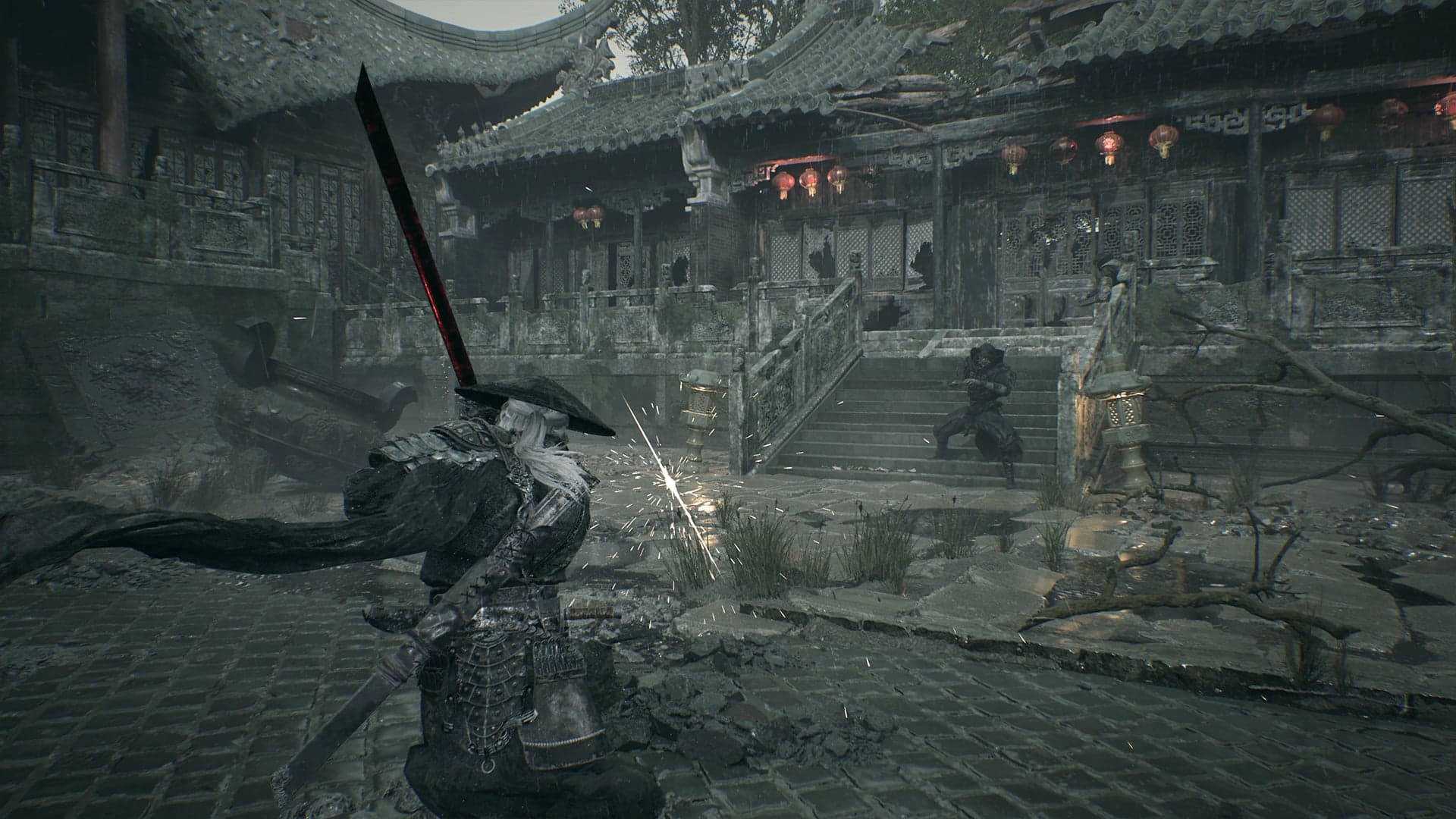
Phantom Blade Zero gameplay is fast action-RPG combat built around martial-arts weapons, seamless combinations, parries, dodges, and deliberate resource use. Soul can carry primary weapons alongside secondary armaments called Phantom Edges, then change equipment to reshape the pace and reach of an encounter. Exploration, upgrades, selectable difficulty, and hidden side content surround that combat core, but the supplied material does not confirm every input, statistic, or final balance value.
Combat overview
Combat is presented as the driving force of the adventure rather than a separate arena mode. The action draws from Hong Kong martial-arts cinema and S-GAME's kungfupunk style, combining recognizable martial disciplines with exaggerated machinery and dark fantasy. Official store copy describes the system as approachable at first while retaining deeper layers for players who learn its timing and weapon relationships.
The available footage and descriptions emphasize exchanges in which offense and defense flow into one another. Blades collide, Soul repositions, and the outcome can turn quickly through a parry, dodge, or counterattack instead of a long sequence of uninterrupted strikes. That framing supports a mobile duel-focused system, although it does not establish exact animation windows or promise that every enemy follows the same rhythm.
Primary weapons and Phantom Edges
The supplied sources support the conservative totals of more than 30 primary weapons and more than 20 Phantom Edges. Primary weapons form Soul's main martial loadout, while Phantom Edges are secondary tools that add ranged pressure or specialized effects. These categories provide variety without requiring this guide to assign unverified damage numbers, rarity tiers, or fixed rankings to individual choices.
Shown examples demonstrate how different armaments change practical combat situations. A drunken sword style builds an unusual swaying rhythm, paired blades combine close attacks with a thrown blade, and a flexible soft blade wraps around defenses while cutting incoming threats. Heavy fists and hammers answer sturdy shields, while a cannon or flame-projecting tool gives Soul ways to pressure formations and groups from another range.
The weapon system is therefore broader than a collection of cosmetic sword models. Each example carries a distinct martial idea, screen presence, and tactical purpose, while weapon upgrades unlock additional forms and techniques. The sources do not publish a complete launch inventory, every weapon name, or a verified comparison chart, so a total list and performance tier list remain outside the confirmed evidence.
Weapon variety also connects the mechanics to the setting's martial lineage. The published descriptions say Soul takes armaments from defeated opponents, and the examples draw on schools, film traditions, and older weapon practices instead of presenting one generic moveset across every blade. Because a light weapon can struggle against a heavy shield while forceful tools break that defense, equipment choice is framed as an answer to combat context rather than a simple progression from a low number to a high one.
Sha-Chi, parry, dodge, and weapon switching
Sha-Chi separates Phantom Blade Zero's resource model from the attack-stamina pattern associated with some action RPGs. The supplied wiki material says ordinary attacks do not consume stamina, while sprinting, dodging, and parrying draw on the separate resource. That structure encourages active offense but still makes defensive movement and repeated reactions part of an economy that players need to manage.
Parrying and dodging are both named core responses, rather than mutually exclusive character builds. Public descriptions also connect combat depth to switching blades, which lets Soul change the available kit and continue pressure with another weapon identity. No supplied source confirms the exact controller buttons, keyboard bindings, cancel rules, or frame data, so this guide does not turn visible animations into invented control instructions.
The material references blue and red attacks, Ghoststep, and Power Surge as topics within the combat guide, but it does not provide enough direct explanation here to define their complete rules. Those names show that the final system includes more than basic strikes and guarding, yet their triggers and interactions need a dedicated sourced breakdown. For now, the reliable loop is weapon offense, Sha-Chi-aware defense, positioning, and equipment changes shaped around the enemy in front of Soul.
Difficulty modes
S-GAME describes multiple difficulty options intended to let different players experience the story. The accessible setting is framed as intuitive and cinematic, aiming to make the player feel like a kungfu master without removing the underlying action system. A harder setting changes boss pressure by having opponents react to spacing, punish repeated behavior, and adapt to habits rather than relying only on a fixed sequence.
An unlockable 66 Days mode ties Soul's narrative countdown to play time and combines it with the demanding combat setting. Failure costs time in that mode, and reaching zero produces permanent death according to the deep-dive material. The sources do not specify its unlock condition, save-handling details, or every difference between modes, so those operational rules should not be inferred from the headline concept.
Exploration and progression
Combat takes place inside handcrafted interconnected areas rather than only along a straight corridor. Villages, valleys, lakes, dark zones, hidden enemies, side quests, rare treasures, and story clues give players reasons to leave the obvious route. Discovery therefore contributes to progression, while fast travel between found locations keeps previously reached parts of the world connected to later play.
Weapon growth provides a second progression track. Upgrading a weapon unlocks forms and techniques, and a Reforge Charm is described as resetting a weapon level, returning the invested materials, and allowing those resources to move into newly acquired equipment. That recovery system directly addresses the concern that experimenting with a fresh weapon automatically wastes every material spent on an earlier favorite.
Confirmed limits
This overview reflects announced systems, official store text, and a developer-led presentation rather than final hands-on measurement. It does not confirm damage values, complete skill trees, input maps, multiplayer features, enemy scaling formulas, or the final contents of every difficulty setting. Claims about the strongest weapon, ideal timing windows, or finished performance would go beyond the supplied evidence and are intentionally excluded.
The confirmed picture is still substantial: Soul uses more than 30 primary weapons, more than 20 Phantom Edges, a Sha-Chi-aware defensive loop, equipment switching, upgrades, and selectable difficulty. Handcrafted exploration feeds secrets and materials back into that action structure, while the Reforge Charm supports experimentation when a new weapon appears. Phantom Blade Zero gameplay is best understood as a fast, weapon-led martial-arts system with room for defensive judgment and meaningful build changes across a broad collection of tools shaped by film and martial traditions, not as a promise about unannounced controls or final balance.