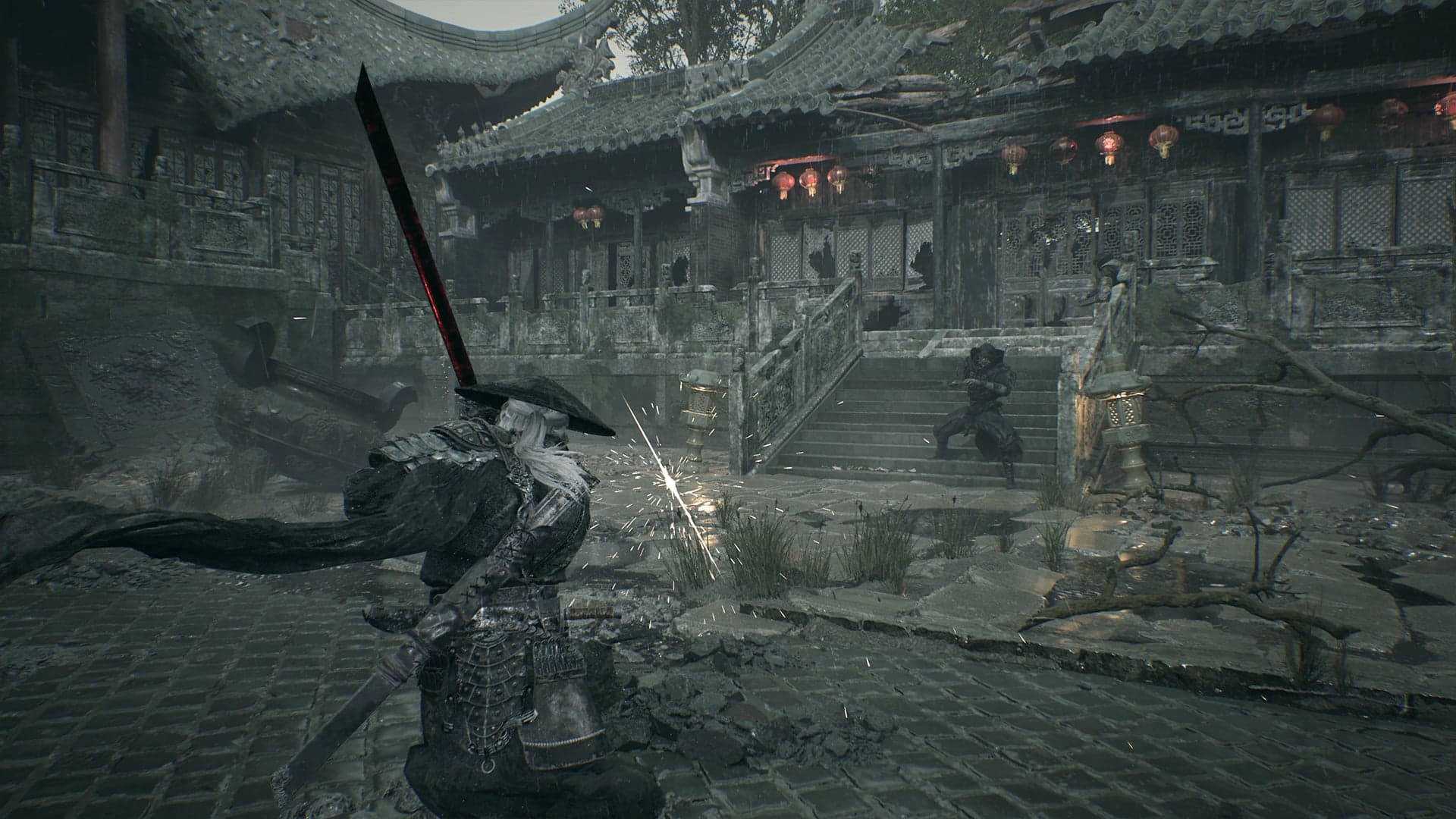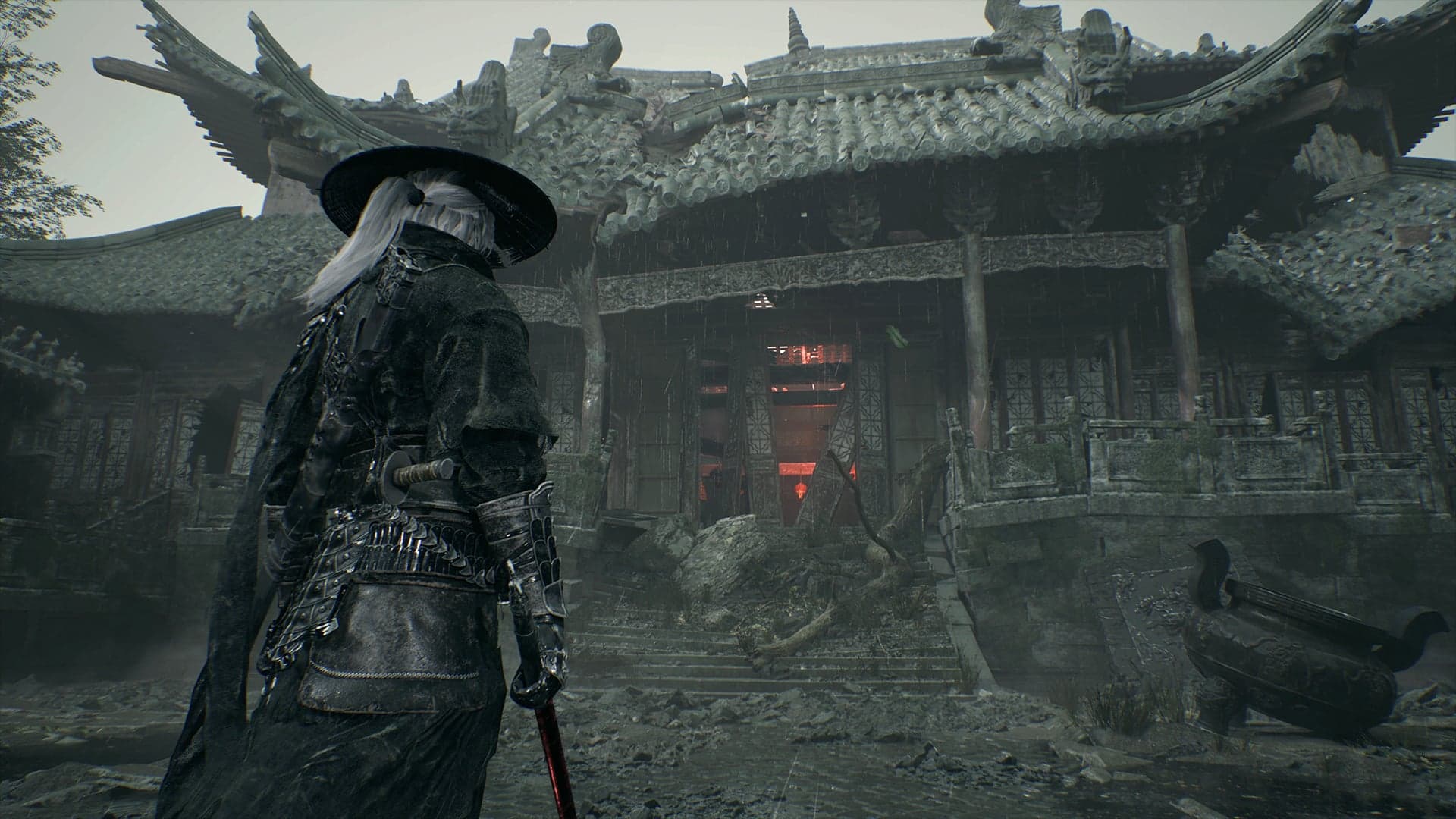
Phantom Blade Zero open world is not the game's structure according to the developer-led deep dive. It is also not a completely linear journey from beginning to end, because handcrafted areas connect into a larger explorable whole with branches, secrets, and return travel. Players move through dense locations guided by eight hand-painted Chinese ink maps that favor approximate direction over exact modern navigation.
Not an open-world game
The clearest official description rejects both ends of a familiar map-design spectrum. Phantom Blade Zero is neither a free-roaming open-world game nor a single unbroken corridor, so comparisons based only on landscape shots miss the stated structure. Its world is built from deliberately composed areas whose paths, encounters, and concealed spaces reward close exploration.
That distinction changes what players should expect from traversal. The supplied material does not promise one continuous landmass that can be crossed in any direction, a checklist of towers, or a fixed number of vast regions. It instead emphasizes connected places and carefully placed discoveries, which supports purposeful route finding without turning every visible horizon into confirmed playable ground.
Handcrafted interconnected areas
The Phantom World links intricate, surreal environments around the settlement named in the translated presentation and its surroundings. The journey extends through villages, valleys, lakes, and darker zones, with each location framed as part of a connected setting rather than a detached mission menu. The world combines martial traditions, steampunk machinery, bodily alteration, and dark fantasy under the studio's kungfupunk aesthetic.
Interconnection also explains why the structure cannot be summarized as a sequence of isolated combat arenas divided by menus. Routes can bend toward optional discoveries, previously found locations remain relevant through fast travel, and approximate maps ask players to understand how nearby spaces relate through landmarks, pathways, and remembered turns. The supplied presentation describes those areas as joining seamlessly into one world, a statement about geographic and narrative continuity that remains fully compatible with its equally direct rejection of an unrestricted open-world label.
Several examples illustrate the variety without establishing formal map names. The presentation shows a valley occupied by brutal bandits, an abandoned warehouse filled with hanging puppets and signs of a dark ritual, and a steam-powered tower built for a sinister experiment. It also describes a huge lake crossed in a strange high-speed boat, indicating that movement and environmental identity change between parts of the journey.
These examples are evidence of authored scenarios, not proof of a specific region count. No supplied source lists the full order of areas, the size of each space, or all transitions between them. A responsible map guide therefore uses the announced landscape types and avoids turning descriptive scenes into invented provinces or claiming that every area has identical scale.
Eight hand-painted ink maps
Soul's journey is guided by eight authentic hand-painted Chinese ink maps. Their visual form belongs to the game's cultural presentation, but they also establish a practical limit: in complicated spaces, the maps provide only an approximate sense of direction. Players are encouraged to read the environment and investigate routes instead of following a perfectly precise position marker through every turn.
Approximate guidance supports the intended mood of discovery. A map can indicate the broad relationship between destinations while leaving shortcuts, hidden rooms, and local path choices for the player to recognize on site. The source does not confirm waypoint customization, map filters, compass options, or exact player tracking, so those familiar interface features should not be assumed.
The eight maps connect the journey into what the presentation calls a single world. That wording describes continuity across crafted areas, but it does not reverse the direct statement that the game is not open world. The safest reading is a linked adventure whose individual spaces and ink-map navigation create cohesion without adopting unrestricted sandbox geography.
Secrets and side content
Exploration rewards attention with hidden enemies, side quests, rare treasures, and important story clues. Official store copy reinforces that idea through references to layered secrets, unusual events, mechanisms, winding paths, and discoveries found by looking back or choosing a less obvious route. These elements give detours a narrative and mechanical purpose beyond simply filling an empty map.
The developer describes every corner as carefully made and filled with surprises waiting to be found. That phrasing suggests density and deliberate placement, yet it does not quantify the number of quests, collectibles, bosses, or hours attached to optional content. The confirmed value lies in the categories of discovery and the handcrafted approach, not in completion estimates absent from the source.
Environmental clues also fit Soul's search for truth during his limited remaining life. Story information is embedded among hostile spaces, local conflicts, and concealed routes, so exploration serves the central mystery as well as equipment growth. The material does not establish that every secret changes the ending or that every side quest is required, and this guide makes neither claim.
Fast travel between discovered locations
Fast travel is available between locations that have already been discovered. This confirmed restriction means the system supports returning across the connected world but does not replace initial exploration with instant access to unseen destinations. It also complements a structure built from multiple dense areas, allowing prior discoveries to remain reachable as Soul's journey advances.
The source does not describe the activation method, travel cost, restrictions during danger, or exact menu presentation. To be confirmed: those practical details need direct interface documentation or final game access, because the existence of fast travel alone cannot answer them. Players can rely on discovered-location travel as a feature while leaving its finer rules open.
What the world structure means
Players looking for a traditional open-world checklist should adjust that expectation, while players worried about an entirely linear action game can also set that concern aside. The announced design joins authored locations, branching investigation, eight approximate ink maps, and travel back to known places. Its central promise is exploration through connected handcrafted spaces, not unlimited movement across an officially measured continent.
Important boundaries remain clear in the supplied evidence. There are no confirmed names for all maps, no official region total beyond the eight physical map artworks, and no published square-mile comparison. Phantom Blade Zero open world searches therefore have a direct answer: the game is not open world, but its villages, valleys, lake routes, dark zones, secrets, side content, and fast travel create a substantial interconnected adventure built around carefully authored paths, deliberate spatial relationships, discoveries, and purposeful returns instead of unrestricted sandbox movement across a single continuous map.