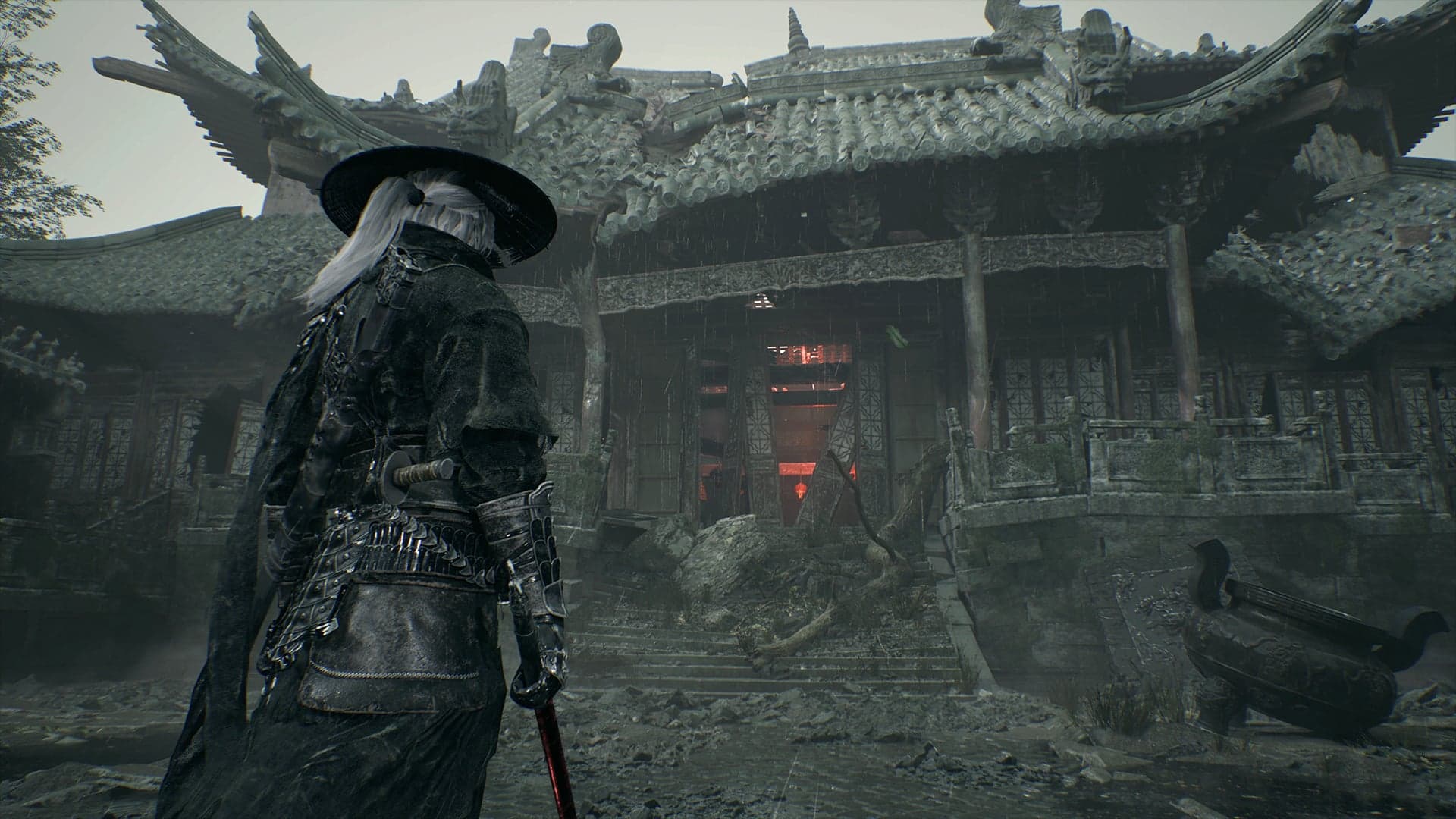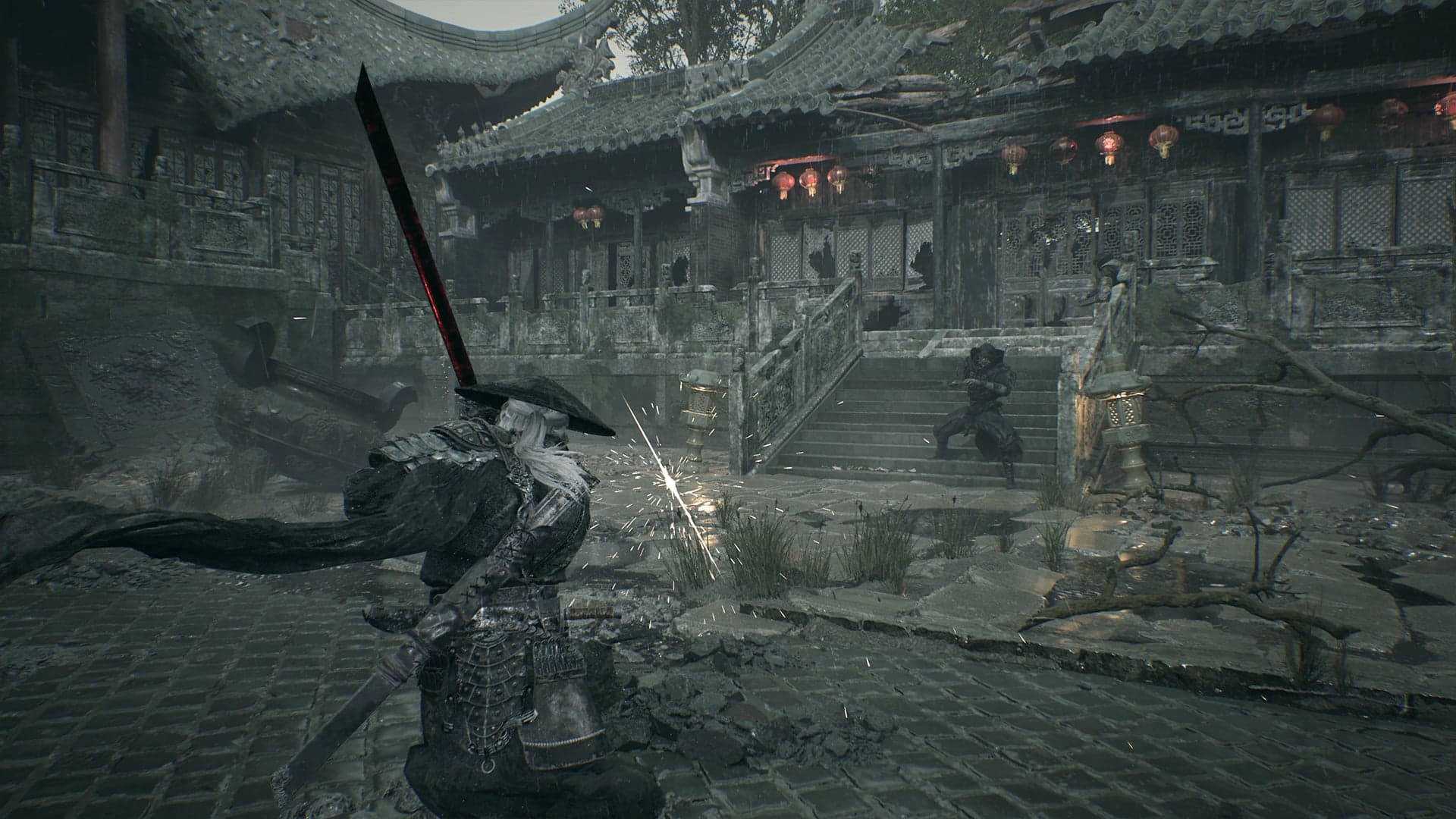
Phantom Blade Zero souls like is not how the developers position the game, despite visible similarities to dark action RPGs. It features dangerous bosses, parries, dodges, and layered exploration, but its combat is described as faster and closer to Ninja Gaiden and Devil May Cry. A separate Sha-Chi economy, attacks that do not consume stamina, martial-arts rhythm, and selectable difficulty support that distinction, while the final hands-on feel remains To be confirmed.
The developer position
Public explanations repeatedly push back against treating Phantom Blade Zero as a pure soulslike. The project is presented as a wuxia action RPG with a complete story, character growth, nonplayer characters, exploration, and broader role-playing systems around its combat. Its layered semi-open areas also sit between a straight action corridor and an unrestricted open world.
This position does not deny every shared genre trait. Dark scenery, close boss exchanges, guarding, evasive movement, and compact exploratory spaces naturally invite comparison with well-known soulslike games. The useful answer is therefore specific rather than absolute: recognizable elements overlap, while the stated combat goals and resource structure point in another direction.
Why the comparison happens
Phantom Blade Zero presents a grim martial world filled with assassins, conspiracies, bodily transformation, mechanical distortions, and formidable enemies. Soul fights at close range with blades and other martial weapons, and defensive timing is visibly important when attacks collide. Those features resemble the surface language of several difficult action RPGs even before a player studies how the underlying systems differ.
Exploration adds another familiar point of comparison. The game uses handcrafted interconnected areas with winding paths, secrets, hidden enemies, side quests, treasures, and story clues instead of a simple stage list. However, environmental density and backtracking do not define one genre by themselves, especially when the developers directly describe a hybrid action-RPG structure.
Boss footage also creates strong visual associations because it highlights tense one-on-one exchanges and rapid punishment. The supplied material says a demanding difficulty has bosses react to spacing and repeated habits, but it does not provide a complete behavioral specification. That evidence supports adaptive pressure on one setting, not a universal claim about genre, difficulty score, or the behavior of every boss.
Sha-Chi instead of attack stamina
The clearest mechanical distinction is the resource economy described by the supplied wiki. Normal attacks do not cost stamina, while sprinting, dodging, and parrying use a separate resource called Sha-Chi. Soul can therefore sustain offensive sequences without paying the same universal resource for every sword strike, although defensive reactions still require awareness and restraint.
This difference matters because it changes the rhythm encouraged by the system. The player is not described as waiting for an attack-stamina bar before every new offensive sequence, and weapon switching helps maintain a more active martial flow. At the same time, spending Sha-Chi on movement and defense prevents the combat from becoming consequence-free button pressing.
Parry and dodge remain central answers to incoming pressure. Their presence should not be read as proof of a soulslike because both techniques appear across many action-game traditions, including fast character-action games and martial-arts titles. The supplied evidence does not disclose exact timing windows, recovery frames, or input buffering, so this comparison stops at confirmed functions rather than projecting another game's rules onto them.
Faster Hong Kong martial-arts influence
S-GAME describes its action through Hong Kong martial-arts cinema and a kungfupunk aesthetic. Real martial performers and established film action talent contributed reference and direction, while traditional techniques are combined with punk machinery and cinematic exaggeration. The result is positioned around fluidity, force, and rapid exchange instead of copying the pacing of a specific existing franchise.
Developer commentary says the combat feels closer to Ninja Gaiden and Devil May Cry than to a soulslike. That comparison communicates speed, continuous offense, and expressive weapon use, but it does not mean Phantom Blade Zero duplicates either series feature for feature. Its primary weapons, Phantom Edges, Sha-Chi system, Chinese martial foundation, and world design form their own announced combination, while exact final results remain To be confirmed.
The official store text calls the weapon combat easy to begin learning but difficult to master fully. Seamless combinations, attack-and-defense transitions, and victories decided in brief moments reinforce an action-forward identity. Those descriptions establish an aspiration and system emphasis, not a verified review judgment about final responsiveness or challenge.
Selectable difficulty changes the answer
Multiple difficulty options are designed for different ways of experiencing the story. An accessible mode is described as intuitive and cinematic, while a demanding mode gives bosses stronger reactions to spacing, repeated actions, and player habits. An unlockable 66 Days mode ties failure to the protagonist's countdown and ends the run permanently when that time reaches zero.
Selectable difficulty is a meaningful departure from the fixed-challenge expectation often attached to soulslike labeling. It lets the announced experience range from a more approachable cinematic setting to a high-stakes countdown mode without changing the central fiction. The source does not give every modifier or unlock requirement, so it cannot support a numerical difficulty comparison with another game.
The modes also show why a single genre label gives incomplete practical advice. A player interested mainly in story can select the intuitive cinematic approach described by the team, while a player seeking stronger consequences can work toward the unlocked countdown challenge. Both paths retain Soul's martial toolset and authored world, so difficulty choice changes pressure without turning the project into a different announced genre.
Weapon breadth reinforces the same point from another angle. More than 30 primary weapons and more than 20 Phantom Edges support different ranges and martial identities, while upgrades unlock further forms and techniques. The source frames that variety around seamless combinations and situational answers, not around one mandated defensive pattern borrowed from a comparison title.
A precise genre description
The most accurate short label is wuxia action RPG. Phantom Blade Zero combines fast martial combat, weapon variety, Sha-Chi management, crafted exploration, progression, story characters, and selectable challenge inside a dark kungfupunk world. Calling it only a soulslike hides the developer's stated priorities, while claiming it shares nothing with that genre ignores obvious supported similarities.
Players should expect parries, dodges, dangerous bosses, and secrets, but not assume an imported stamina model or identical pacing. Hands-on conclusions about exact difficulty, responsiveness, boss fairness, or how the final release feels are not established by the supplied source and are excluded here. Phantom Blade Zero souls like comparisons are useful as a starting question, yet the sourced answer remains that the developers position it as a faster martial-arts action RPG rather than a pure soulslike.